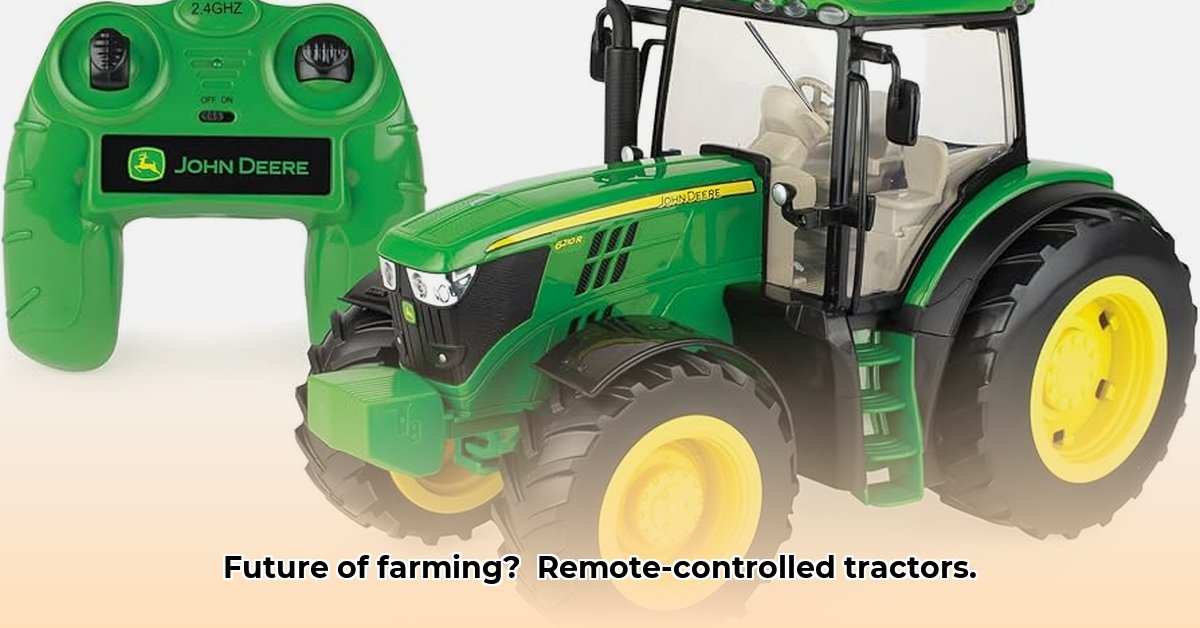
Imagine a farmer, comfortably seated in their home office, expertly guiding a tractor across their fields using a laptop. This isn't science fiction; radio-controlled tractors, while still in their nascent stages, represent a significant leap forward in sustainable agriculture. While toy models abound, the potential of this technology to transform farming practices is profound, promising increased efficiency, reduced environmental impact, and a more sustainable future for food production. For more information on high-powered tractors, see this 150 HP John Deere Tractor example. This article explores the current state of this evolving technology, the challenges and opportunities it presents, and its potential to revolutionize the agricultural landscape.
From Toy Tractors to Precision Farming: A Gradual Evolution
Many of us are familiar with the iconic radio-controlled John Deere toy tractors. These simple toys embody the fundamental concept of remote operation – a concept now rapidly advancing into sophisticated, commercially viable agricultural equipment. The transition from toy to tool, however, is far from trivial. John Deere itself offers some remote functionalities in its high-end tractors; however, the widespread, fully remote operation of tractors across a variety of farming tasks remains a significant challenge. Current commercial applications are largely confined to specialized scenarios, such as managing equipment in hazardous conditions or performing tasks requiring extreme precision. The technology's potential is clear, but its practical implementation in everyday farming is undergoing a period of substantial development.
Technological Hurdles and Innovative Solutions
The path to widespread adoption of radio-controlled John Deere tractors and similar technologies is paved with significant technological hurdles. These include:
1. Reliable Communication: Maintaining a consistent and reliable communication link between the operator and the tractor is paramount. Signal loss or interference can lead to disastrous consequences. Robust, redundant communication systems are therefore crucial, employing multiple channels and advanced signal-boosting technologies. Loss of connection—even momentarily—during a critical farm operation could have serious economic and safety repercussions. What solutions can ensure uninterrupted connectivity in challenging environments?
2. Autonomous Navigation: Fully autonomous navigation is an area demanding significant research and development. This involves more than simply steering the tractor; it requires machines capable of making complex decisions based on real-time data analysis, adapting to changing field conditions, and autonomously adjusting operations based on weather conditions or identifying and avoiding obstacles. Sophisticated sensors, advanced algorithms, and powerful on-board computing capabilities are essential. Are we close to fully autonomous tractors, or will we need significant breakthroughs in Artificial Intelligence (AI)?
3. Safety Protocols: Ensuring the safety of both the operator and the surrounding environment is paramount. The implementation of robust fail-safe mechanisms and comprehensive safety protocols is essential. Regulatory oversight will also intensify as this technology matures. How can we guarantee the safe operation of powerful agricultural machinery under remote control, mitigating the risk of accidents?
4. Cost-Effectiveness: The high initial investment cost remains a substantial barrier to widespread adoption, particularly for smaller farms. Research and development focused on creating more affordable, efficient technologies are crucial for broad market penetration. How can we make this groundbreaking technology accessible to a wider range of farmers, not just large agricultural corporations?
Impact on Stakeholders: A Multifaceted Perspective
The transformative potential of remote-controlled farming equipment extends beyond the farm itself, influencing various stakeholders:
- Farmers: Increased efficiency, reduced labor costs, enhanced precision agriculture, and potential for more sustainable farming practices.
- Manufacturers: New market opportunities, increased R&D investment in advanced technologies, and the development of comprehensive remote control systems.
- Regulators: The need for safety guidelines, regulations addressing liability and data privacy, and frameworks for the ethical use of autonomous agricultural systems.
- Educational Institutions: The incorporation of remote-controlled equipment into agricultural curricula, providing hands-on training and preparing the next generation for a technology-driven agricultural landscape.
The Future of Farming: A More Sustainable Vision
The potential benefits of radio-controlled tractors extend far beyond simple automation. Imagine a future where farmers manage large operations from central control centers, monitoring multiple machines simultaneously, optimizing resource allocation, and employing precision agriculture techniques to minimize waste and environmental impact. Data collected from these systems would facilitate improved decision-making and contribute to a more sustainable approach to food production. This vision requires careful planning and investment, but the potential rewards, including increased efficiency, reduced environmental damage, and enhanced food security, are considerable. Yet, the transition must address concerns about potential job displacement and ensure equitable access to this transformative technology.
Dr. Anya Sharma, Professor of Agricultural Engineering at Cornell University, notes, "The shift to remote-controlled farming isn't just about technology; it's about a fundamental reorganization of agricultural practices. We need to thoughtfully consider the societal implications and ensure a just transition for all stakeholders."
Implementing Remote Controlled Farming: A Practical Roadmap
Successfully implementing remote-controlled farming requires a phased approach:
- Thorough Needs Assessment: Begin by identifying specific tasks best suited for automation, prioritizing efficiency gains and safety improvements.
- Technology Selection: Carefully evaluate available systems, considering factors like communication reliability, autonomy level, and cost-effectiveness.
- Safety Protocol Development: Implement comprehensive safety procedures, including redundancy in communication and control systems, fail-safes, and operator training programs. A 95% success rate in safety simulations is recommended before deployment.
- Regulatory Compliance: Ensure compliance with all relevant safety and environmental regulations.
- Phased Implementation: Start with smaller-scale trials to refine procedures and identify any unforeseen challenges before widespread deployment.
- Continuous Monitoring and Improvement: Regularly assess the effectiveness of the system, making necessary adjustments to optimize performance and address any issues.
The future of farming is likely to be a blend of human expertise and technological advancement. Radio-controlled John Deere tractors and similar technologies represent a significant step toward a more efficient, sustainable, and technologically advanced agricultural future.